The Evidence That Never Made the Headlines: Revisiting the Casa Pia Mercury Trial

THE CHILDREN OF CASA PIA

Part 2 of 4: The Evidence That Never Made the Headlines

By Anita Vazquez Tibau

In Part 1, we established the timeline: a federal mercury-amalgam trial running inside a Portuguese institution consumed by a child sexual-abuse scandal, and a consent process that raises more questions than it answers. Here, we go into the primary documents — including one FOIA record that should never have been allowed to disappear.

THE FIRST FOIA WARNING: SENTINEL EVENTS IN 1999

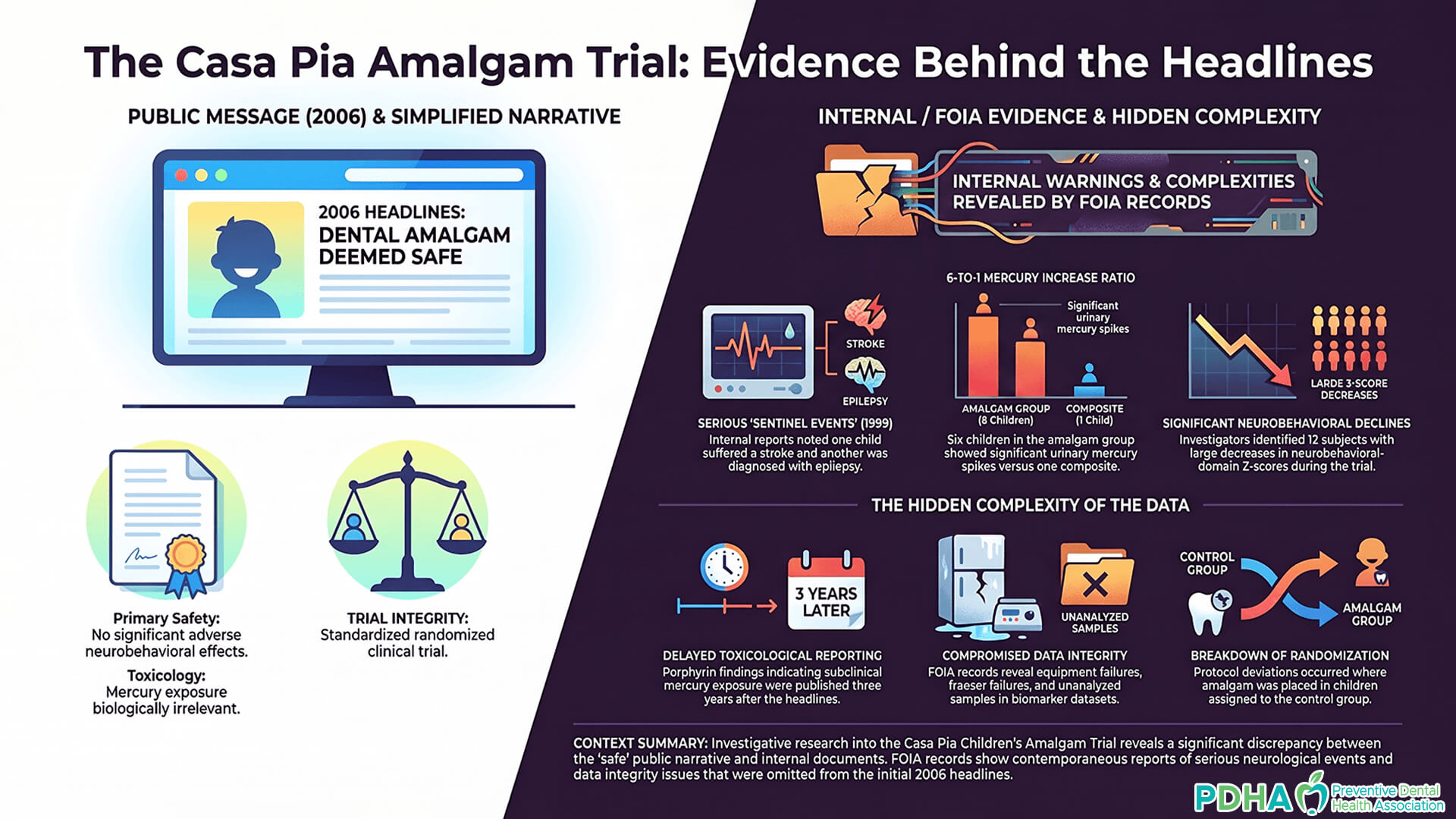
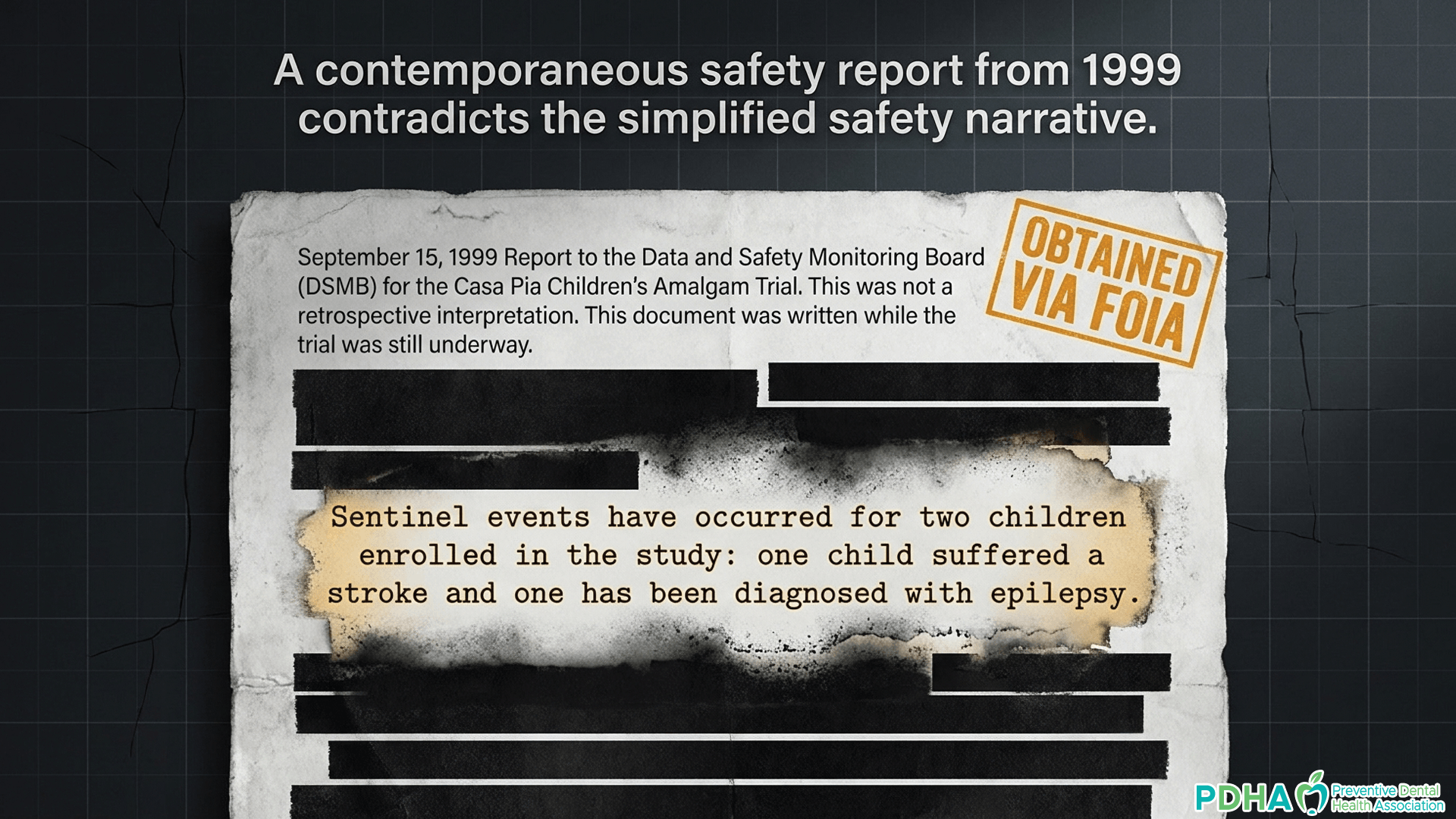
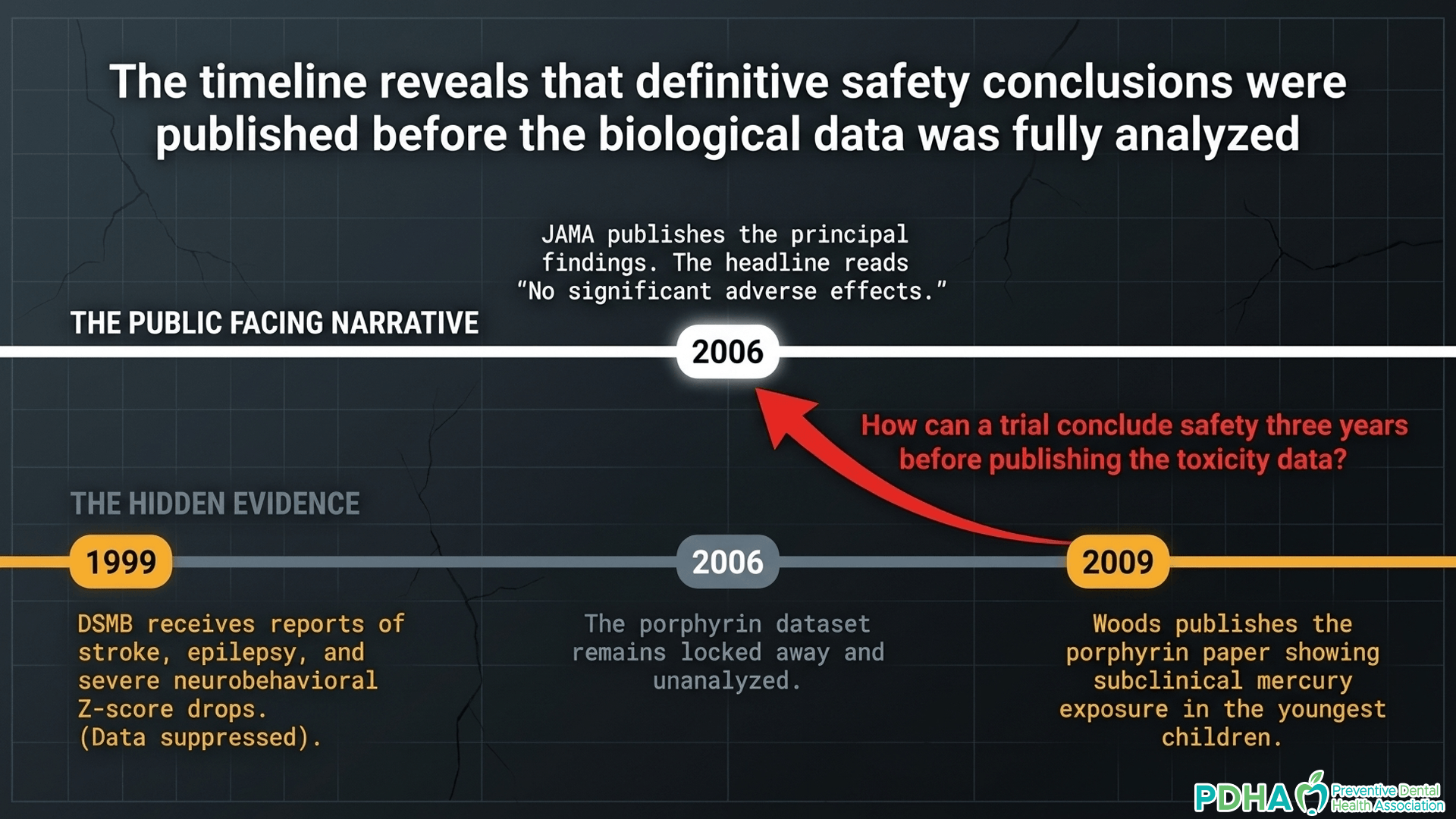
One of the most important documents I obtained through the Freedom of Information Act is a September 15, 1999 Report to the Data and Safety Monitoring Board for the Casa Pia Children’s Amalgam Trial.

This document was written while the trial was still underway.

It is not a retrospective interpretation.

It is a contemporaneous report from the investigators to the body charged with monitoring the safety of the study.

The report states:

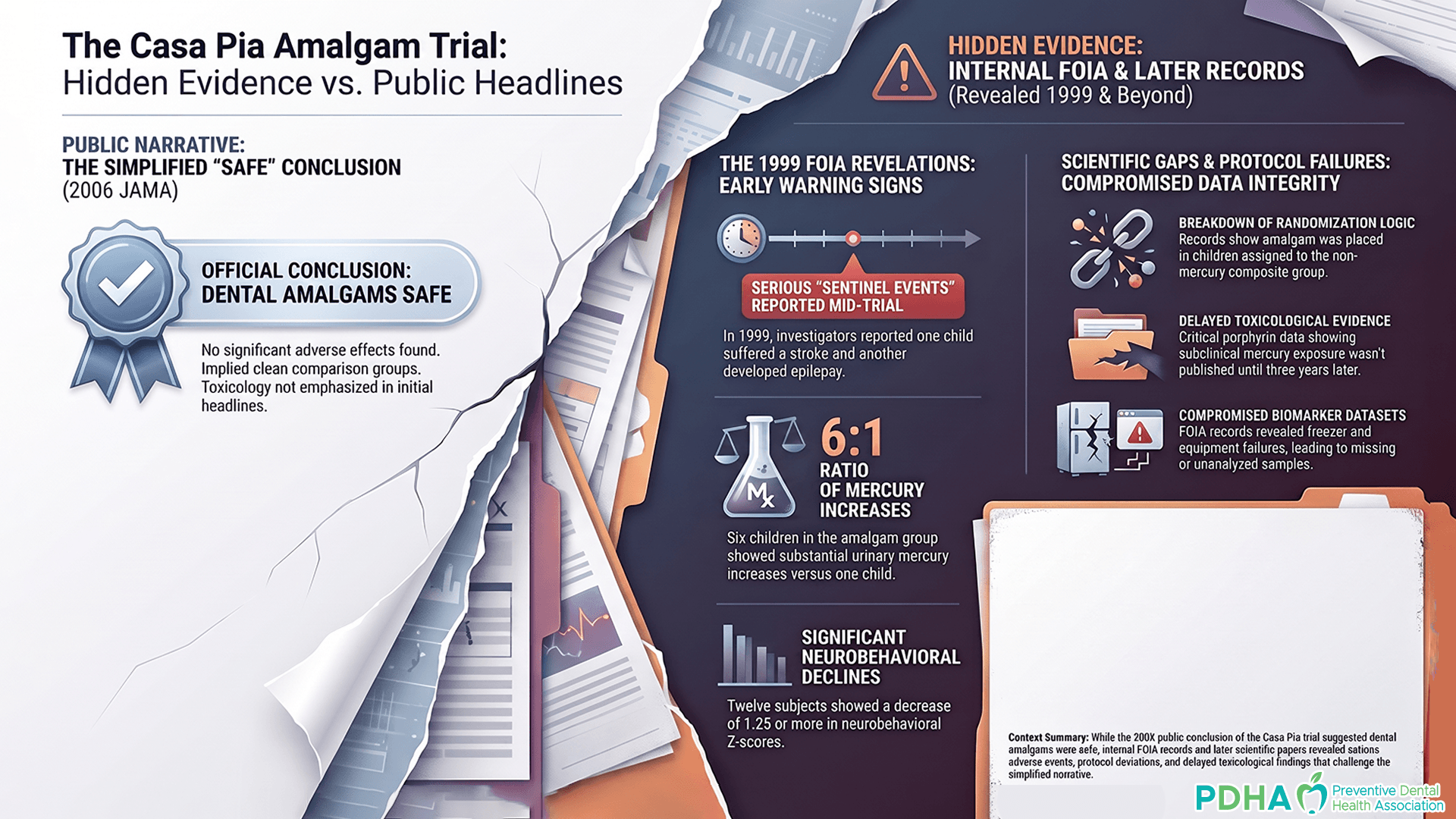
“Sentinel events have occurred for two children enrolled in the study: one child suffered a stroke and one has been diagnosed with epilepsy.”

The report then states that the investigators had identified:

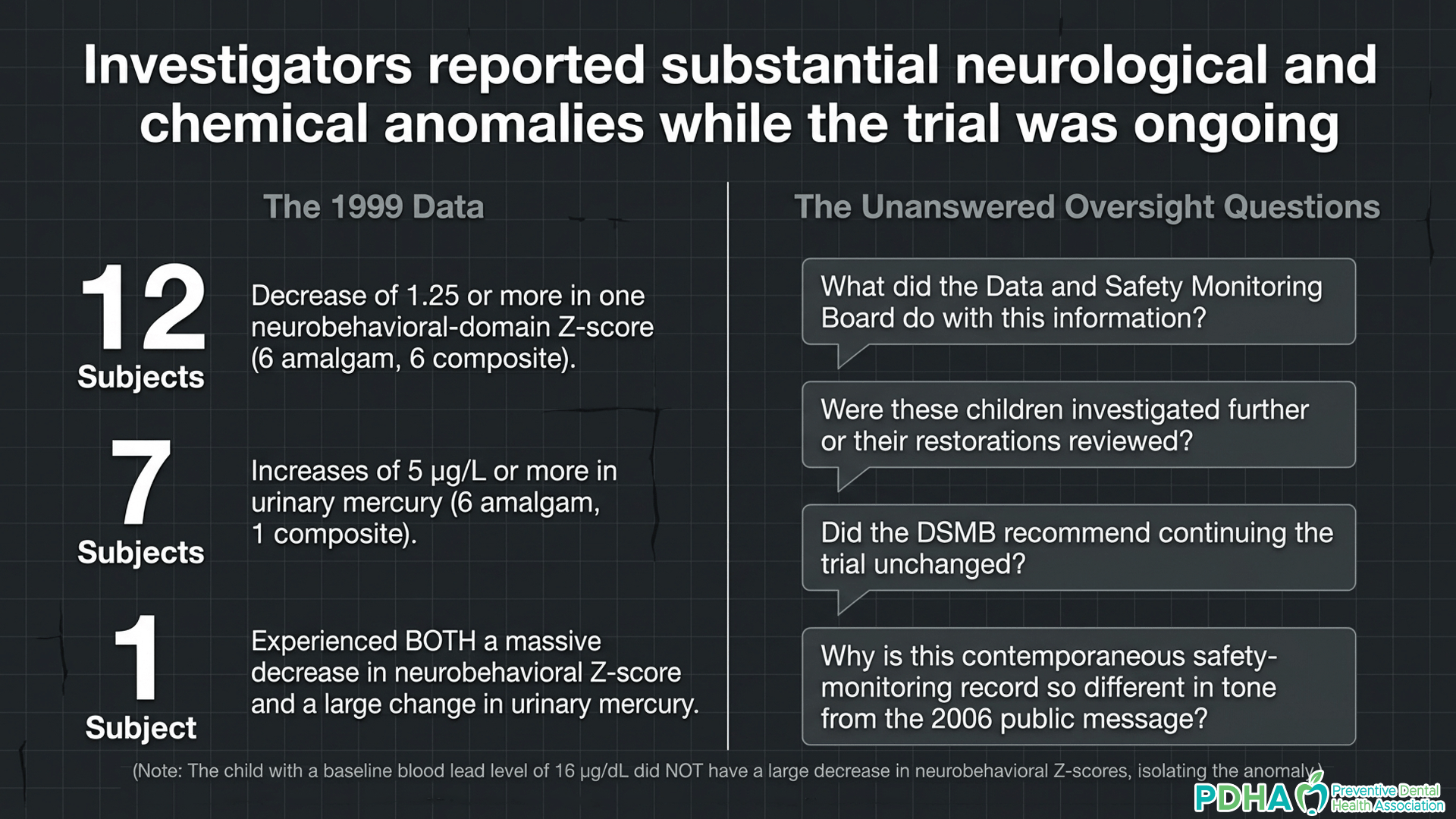
  • 12 subjects with a decrease of 1.25 or more in one of the neurobehavioral-domain Z-scores — six in each treatment group; and…
  • 7 children with increases of 5 µg/L or more in urinary mercury — six in the amalgam group and one in the composite group.

The investigators further reported that:

“One of these children with a large change in urinary mercury level also was one of the 12 with a large decrease in one of the neurobehavioral Z-scores.” ²

The investigators also reported that the child with a baseline blood lead level of 16 µg/dL did not have a large decrease in neurobehavioral Z-scores.

The document does not state that amalgam caused the stroke, epilepsy, or neurobehavioral changes.

It does not establish causation.

The six-to-one distribution of large urinary-mercury increases also does not, by itself, prove that amalgam caused injury.

But the document establishes something that, in my opinion, the public record should never have allowed to disappear:

While the experiment was still underway, investigators were already reporting serious neurological sentinel events, substantial individual neurobehavioral declines, and substantial increases in urinary mercury to the Data and Safety Monitoring Board.

That raises questions.

  • What did the Data and Safety Monitoring Board do with this information?
  • Were these children investigated further?
  • Were their individual mercury levels followed over time?
  • Were their dental restorations reviewed?
  • Were any restorations removed or replaced?
  • Were additional neurological or renal evaluations performed?
  • Did the DSMB recommend any change in the protocol?
  • Did it recommend continuing the trial unchanged?
  • Were the events reported to the relevant IRB or federal oversight bodies?
  • How were these events ultimately incorporated into the final analysis?
  • And why is this contemporaneous safety-monitoring record so different in tone from the simplified public message that emerged years later?

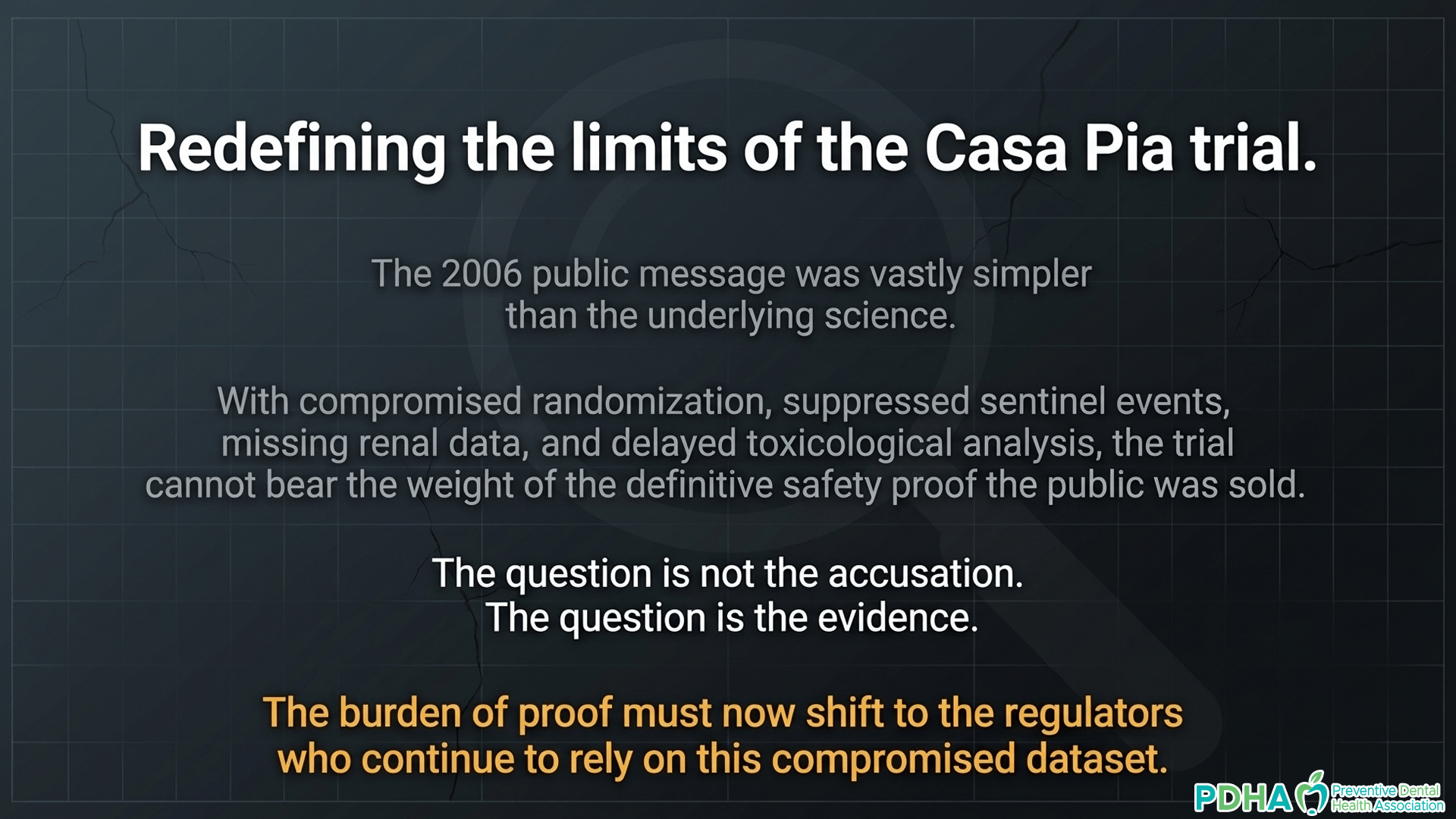
The question is not the accusation. The question is the evidence.

Source: Casa Pia Children’s Amalgam Trial, Report to the Data and Safety Monitoring Board, September 15, 1999, obtained through FOIA.

WHEN THE RANDOMIZATION BROKE DOWN

Randomization is the foundation of a randomized clinical trial.

The purpose is to create comparable groups so that differences in outcomes can reasonably be attributed to the intervention rather than to pre-existing differences between participants.

The Casa Pia records identify protocol deviations involving eligibility and treatment assignment.

They include children who entered the study despite conditions that the stated protocol excluded.

The records also indicate instances in which amalgam was placed in children assigned to the composite group.

If confirmed in the complete treatment records, that matters enormously.

It does not automatically invalidate every finding.

But every deviation reduces confidence in a clean comparison between the groups.

A trial that is supposed to answer whether one material is safer than another depends on maintaining the distinction between those materials.

If that distinction breaks down, the investigators must account for it transparently.

The public deserves to know exactly how many such cases occurred, how they were handled statistically, and whether excluding or retaining those participants changed the results.

JAMES WOODS AND THE MISSING TOXICOLOGICAL QUESTION

This is the finding that never made it into the headline:

“Mercury exposure showed up in the body’s own chemistry, in the youngest children, during the years they were most exposed.”

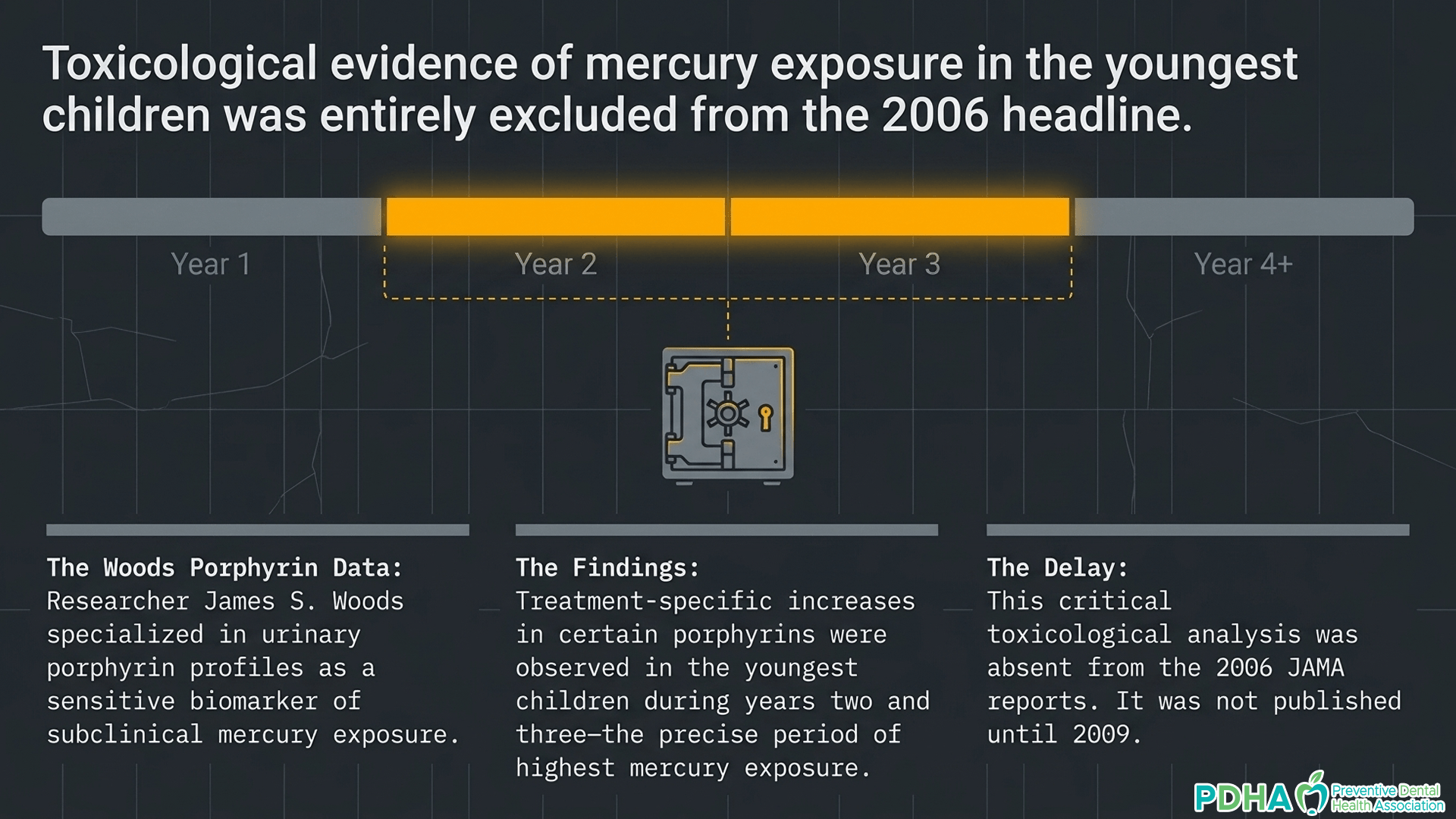
James S. Woods had spent years studying urinary porphyrin profiles in people exposed to mercury occupationally.

His earlier research examined porphyrin changes associated with mercury exposure and explored their usefulness as biomarkers.

That history matters because Woods later became a researcher on the Casa Pia trial.

The trial did not examine only IQ and broad neurobehavioral outcomes. It also collected toxicological and renal measurements.

But the porphyrin analysis was not published with the principal 2006 trial reports.

The Casa Pia porphyrin paper appeared in 2009. It reported that, although no significant differences between treatment groups were found when all subjects were considered together, treatment-specific increases in certain porphyrins were observed in younger children during years two and three, the period of highest mercury exposure. The authors described those findings as consistent with evidence supporting urinary porphyrins as a sensitive indicator of subclinical mercury exposure.

That is a very different statement from saying the porphyrin study “proved the children were poisoned.”

It did not.

Nor should this article claim that it did.

The important issue is timing and completeness.

The headline-level 2006 conclusions were published before the porphyrin analysis appeared in 2009.

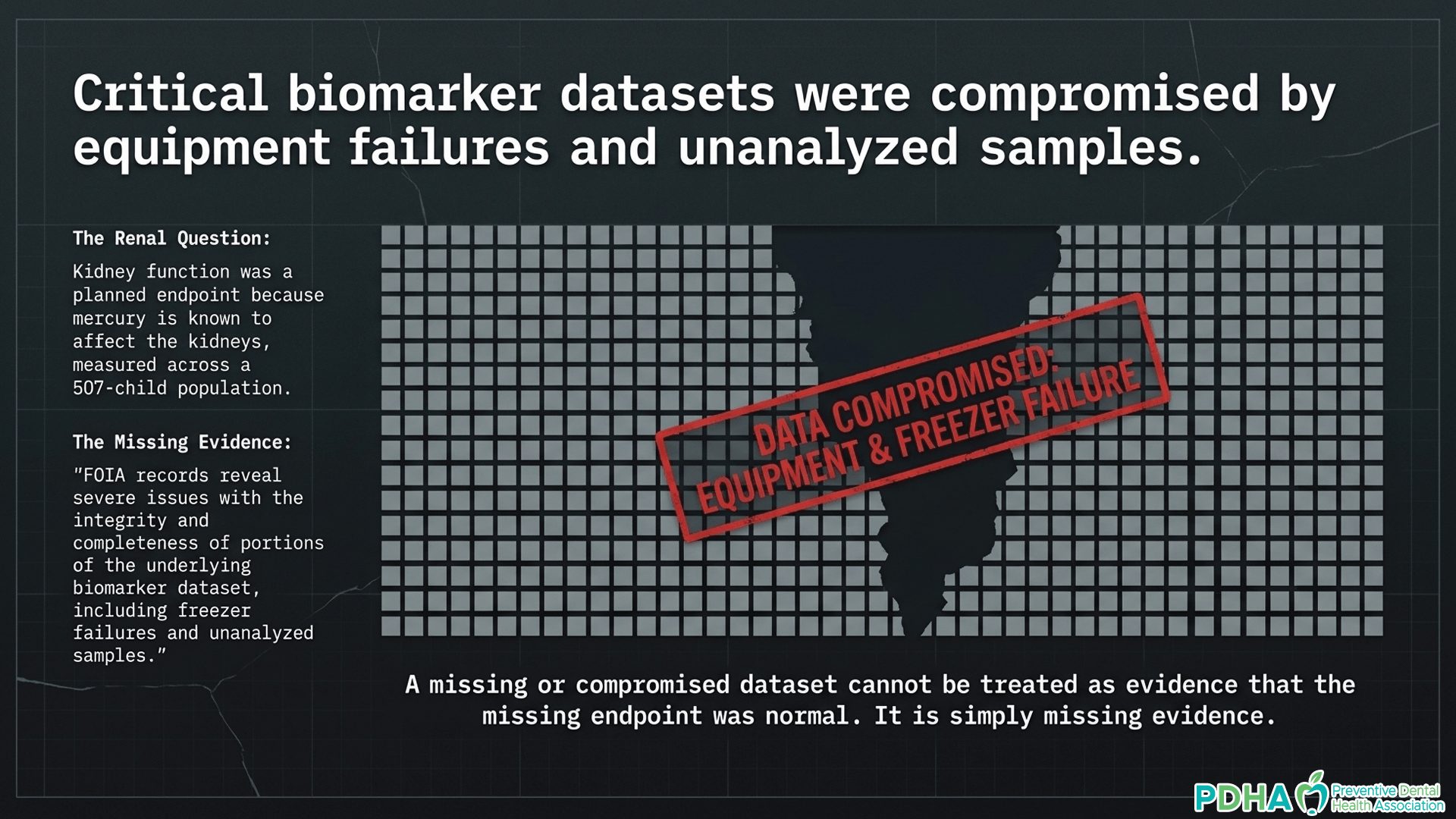
And the FOIA records raise additional questions about the integrity and completeness of portions of the underlying biomarker dataset, including equipment and freezer failures and samples that were not analyzed.

Those records should be independently audited.

A missing or compromised dataset cannot be treated as evidence that the missing endpoint was normal.

It is simply missing evidence.

That distinction matters.

THE KIDNEY DATA DESERVES THE SAME SCRUTINY

The renal question is equally important.

The Casa Pia researchers later published a study of biomarkers of kidney integrity in the cohort. The paper describes the 507-child population and examines urinary biomarkers associated with renal tubular and glomerular integrity over the course of amalgam treatment.

Again, the appropriate conclusion is not that the study proved kidney damage.

The investigators did not conclude that.

The point is that kidney function was important enough to be a planned endpoint because mercury is known to affect the kidneys.

That makes the quality and completeness of the renal data central to the question of what the trial actually established.

It also makes the reporting of adverse renal events particularly important.

THE 2006 HEADLINES WERE SIMPLER THAN THE SCIENCE

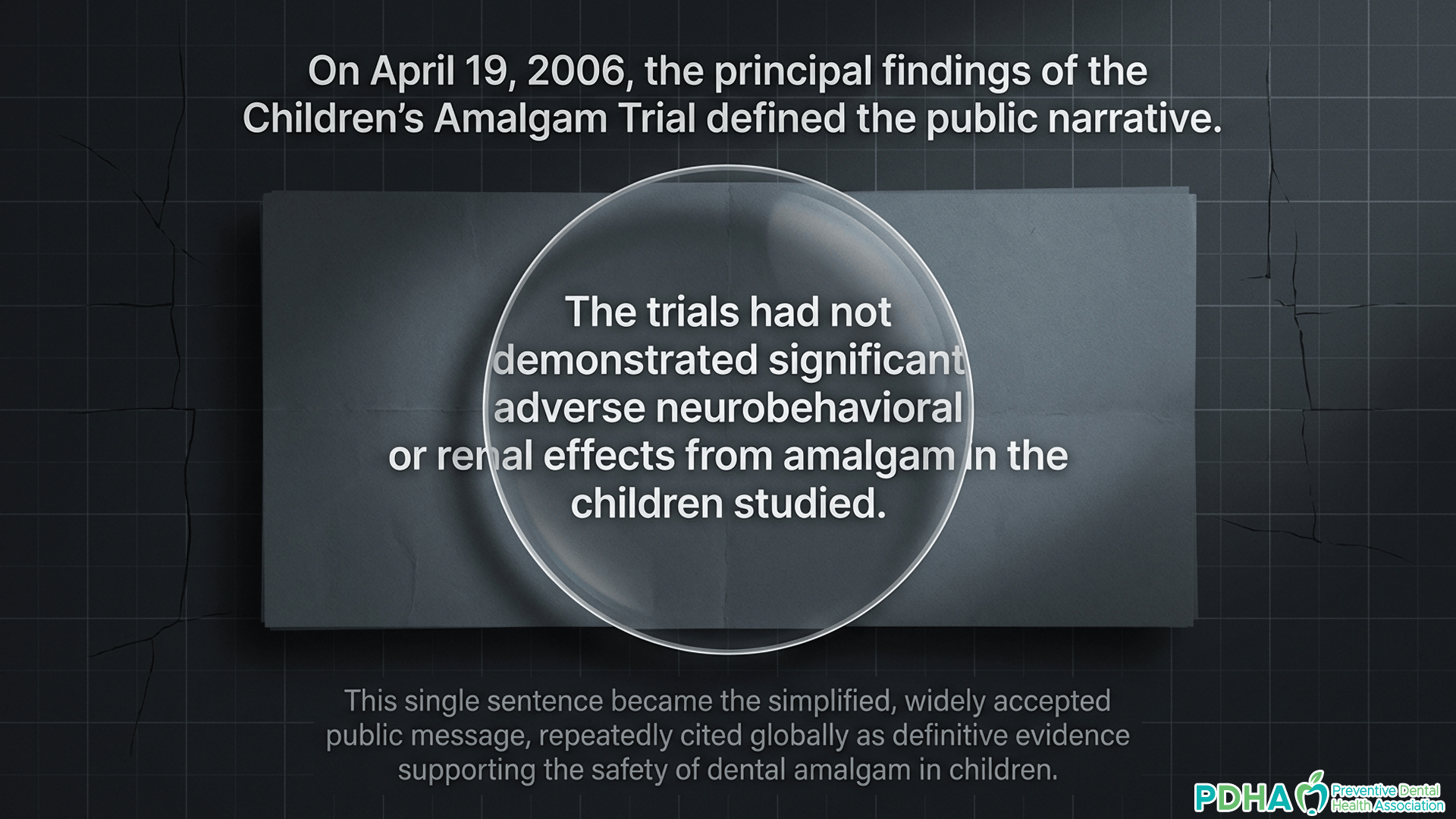
On April 19, 2006, the principal Children’s Amalgam Trial findings appeared in JAMA.

The public message was simple:

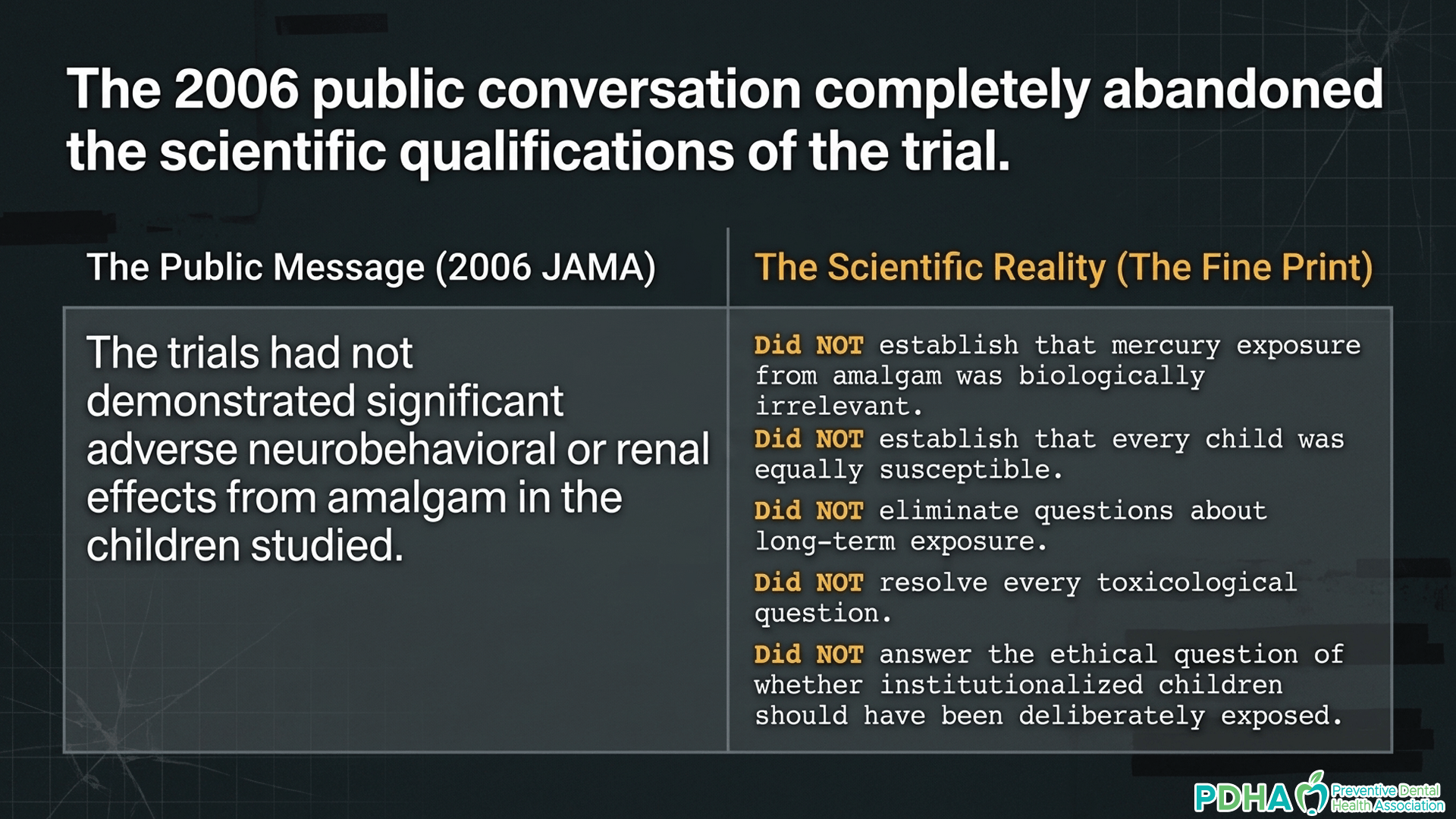
The trials had not demonstrated significant adverse neurobehavioral or renal effects from amalgam in the children studied.

That finding has been cited repeatedly as evidence supporting the safety of dental amalgam.

But the public conversation often lost the qualifications.

The study did not establish that mercury exposure from amalgam was biologically irrelevant.

It did not establish that every child was equally susceptible.

It did not eliminate questions about long-term exposure.

It did not resolve every toxicological question.

And it certainly did not answer whether institutionalized children should have been deliberately exposed in the first place.

Those are different questions.

Additional Supporting Evidence

The following infographics summarize key concepts, clinical observations, and supporting evidence referenced throughout this article. Click any image to view a larger version for easier reading and closer examination.

The following records were obtained through Freedom of Information Act request PR-2012-00165 and are provided as primary-source documentation supporting this article.

Casa Pia Study Consent Form for Parents or Legal Guardians – FOIA PR-2012-00165_Stage3, Page 68 (PDF)

First-Year Follow-Up Results on Secondary Outcome Variables – FOIA PR-2012-00165_Stage3, Page 31 (PDF)
References:

1. Townsend JC, et al. The Children’s Amalgam Trial: design and methods. Contemporary Clinical Trials. 2003. https://pubmed.ncbi.nlm.nih.gov/14662283/

2. DeRouen TA, et al. Neurobehavioral Effects of Dental Amalgam in Children: A Randomized Clinical Trial. JAMA. 2006. https://jamanetwork.com/journals/jama/fullarticle/202707

3. Bellinger DC, et al. Neuropsychological and Renal Effects of Dental Amalgam in Children: A Randomized Clinical Trial. JAMA. 2006. https://jamanetwork.com/journals/jama/fullarticle/202706

4. Woods JS, et al. Urinary porphyrin excretion in children with mercury amalgam treatment: findings from the Casa Pia Children’s Dental Amalgam Trial. Journal of Toxicology and Environmental Health. 2009. https://pubmed.ncbi.nlm.nih.gov/19557617/

5. Woods JS, et al. Biomarkers of kidney integrity in children and adolescents with dental amalgam mercury exposure: Findings from the Casa Pia children’s amalgam trial. Environmental Research. 2008. https://pmc.ncbi.nlm.nih.gov/articles/PMC3236600/

6. FDA. White Paper: FDA Update/Review of Potential Adverse Health Risks Associated with Exposure to Mercury in Dental Amalgam. https://www.fda.gov/medical-devices/dental-amalgam-fillings/white-paper-fda-updatereview-potential-adverse-health-risks-associated-exposure-mercury-dental

7. FDA. Addendum to the Dental Amalgam White Paper: Response to 2006 Joint Advisory Panel Comments and Recommendations. https://www.fda.gov/media/77119/download

8. FDA. Dental Amalgam, Mercury, and Amalgam Alloy — Class II Special Controls Guidance. July 28, 2009. https://iabdm.org/wp-content/uploads/FDA-Dental-Amalgam-Mercury-and-Amalgam-Alloy-Class-II-Special-Controls-Guidance.pdf

9. FDA. FDA Issues Recommendations for Certain High-Risk Groups Regarding Mercury-Containing Dental Amalgam. September 24, 2020. https://www.fda.gov/news-events/press-announcements/fda-issues-recommendations-certain-high-risk-groups-regarding-mercury-containing-dental-amalgam

10. FDA. Information for Patients About Dental Amalgam Fillings. https://www.fda.gov/medical-devices/dental-amalgam-fillings/information-patients-about-dental-amalgam-fillings?trk=public_post_comment-text

11. Schick SF, Glantz SA. Old Ways, New Means: Tobacco Industry Funding of Academic and Private Sector Scientists Since the Master Settlement Agreement. Tobacco Control. 2007. https://pmc.ncbi.nlm.nih.gov/articles/PMC2598497/

12. Life Sciences Research Office. Report on Dental Amalgam Safety Review. 2004.
https://www.govinfo.gov/content/pkg/FR-2009-08-04/pdf/E9-18447.pdf
http://www.lsro.org/presentation_files/amalgam/amalgam_execsum.pdf

13. Florida Department of Health, Office of the Surgeon General. State Surgeon General Dr. Joseph A. Ladapo Issues Guidance for Amalgam Restoration Use. August 25, 2025. https://content.govdelivery.com/accounts/FLDOH/bulletins/3ef6997

14. Indian Health Service. Indian Health Service to End Use of Mercury-Containing Dental Amalgam by 2027. February 9, 2026. https://www.hhs.gov/press-room/ihs-to-end-use-of-mercury-containing-dental-amalgam-by-2027.html

15. U.S. Department of Health and Human Services. Trump Administration Encourages States to End Mercury-Containing Dental Fillings. July 22, 2026. https://www.hhs.gov/press-room/trump-administration-encourages-states-end-mercury-containing-dental-fillings.html

16. Casa Pia Children’s Amalgam Trial. Report to the Data and Safety Monitoring Board. September 15, 1999. Freedom of Information Act Records Obtained by the Author:
PR-2012-00165_Stage3, Page 68
PR-2012-00165_Stage3, Page 31

Watch: The Secret Experiment Inside Casa Pia / Part 2

A brief visual introduction to the events, evidence, and unanswered questions explored in this four-part series.

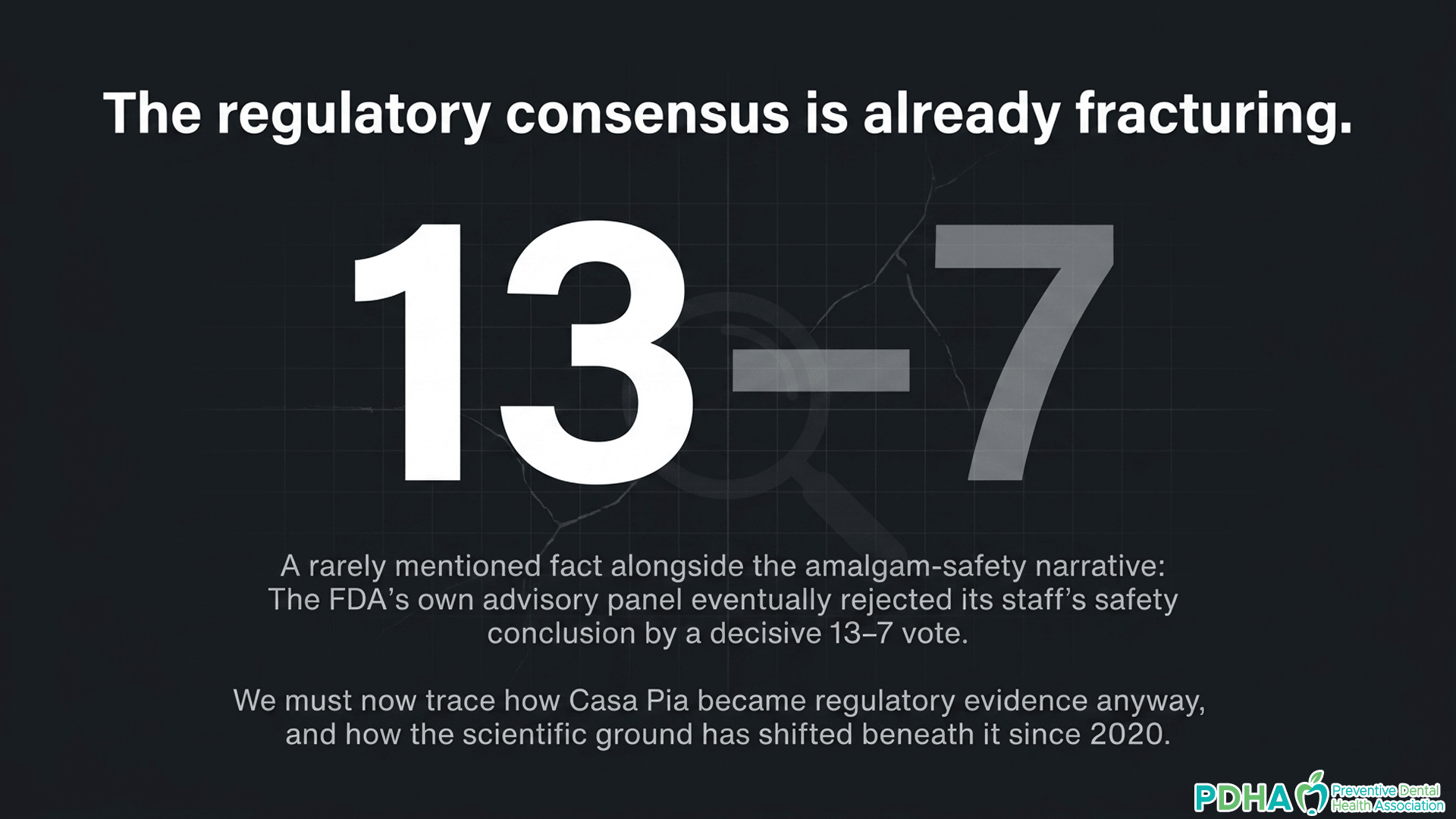
In Part 3: the FDA’s own advisory panel rejected its staff’s safety conclusion by a 13–7 vote — a fact rarely mentioned alongside the amalgam-safety narrative. We trace how Casa Pia became regulatory evidence anyway, and how the ground has shifted beneath it since 2020.

[Part 3 – Coming Soon]

Like this article?

Share on Facebook
Share on Twitter
Share on Linkdin
Share on Pinterest

The Evidence That Never Made the Headlines: Revisiting the Casa Pia Mercury Trial

One of the most important documents I obtained through the Freedom of Information Act is a September 15, 1999 Report to the Data and Safety Monitoring Board for the Casa Pia Children’s Amalgam Trial. This document was written while the trial was still underway. It is not a retrospective interpretation. It is a contemporaneous report from the investigators to the body charged with monitoring the safety of the study.

Learn More »

PDHA Urges Immediate End to Medicaid Coverage of Mercury Amalgam Fillings Following Historic HHS Notification

The Preventive Dental Health Association (PDHA) calls upon all State Medicaid Directors to immediately end coverage of mercury-containing dental amalgam fillings, acting decisively on the recent historic notification from the U.S. Department of Health and Human Services (HHS) that urges states to restrict or eliminate reimbursement for these materials in order to reduce unnecessary toxic mercury exposure for patients.

Learn More »