
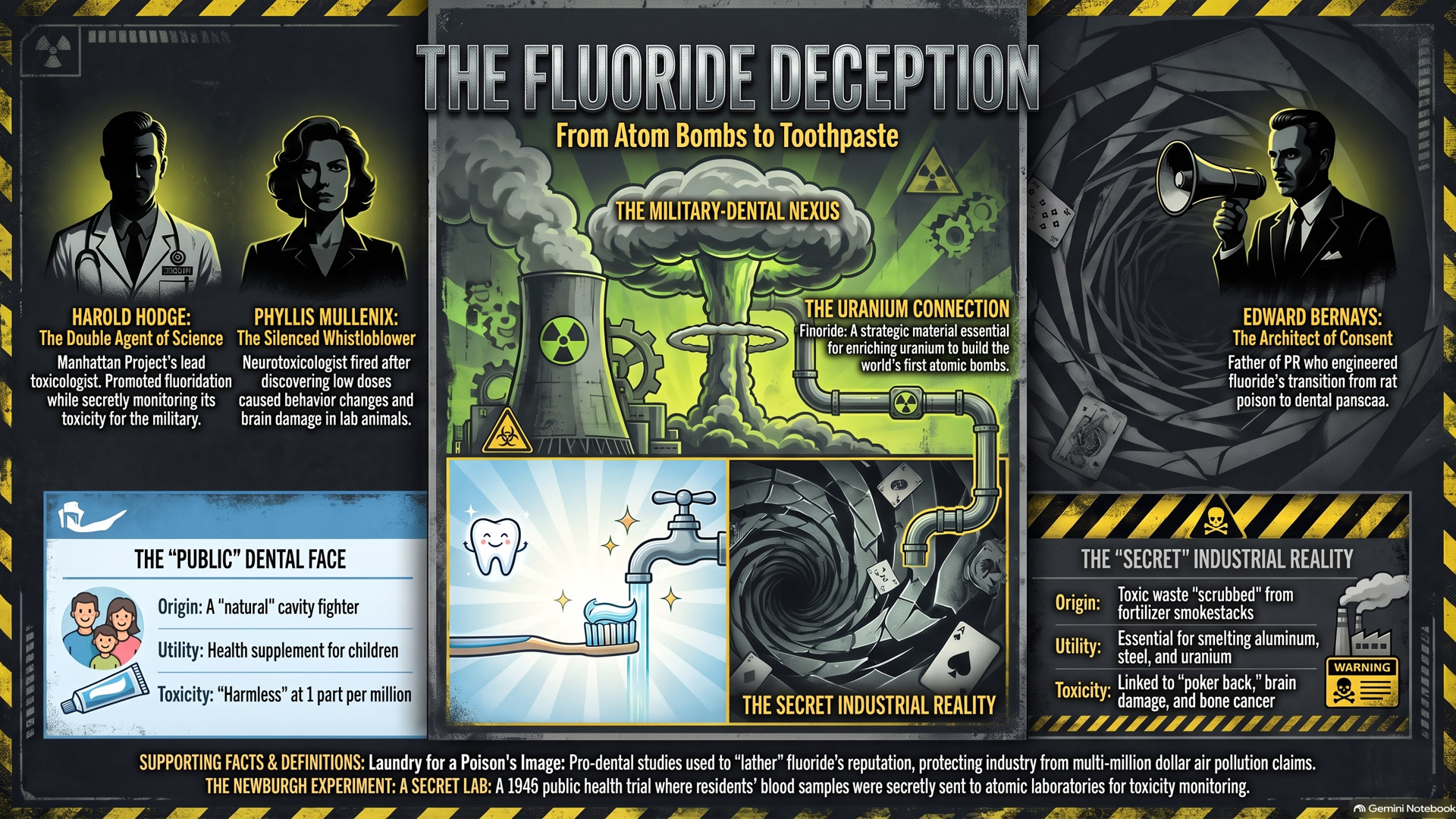
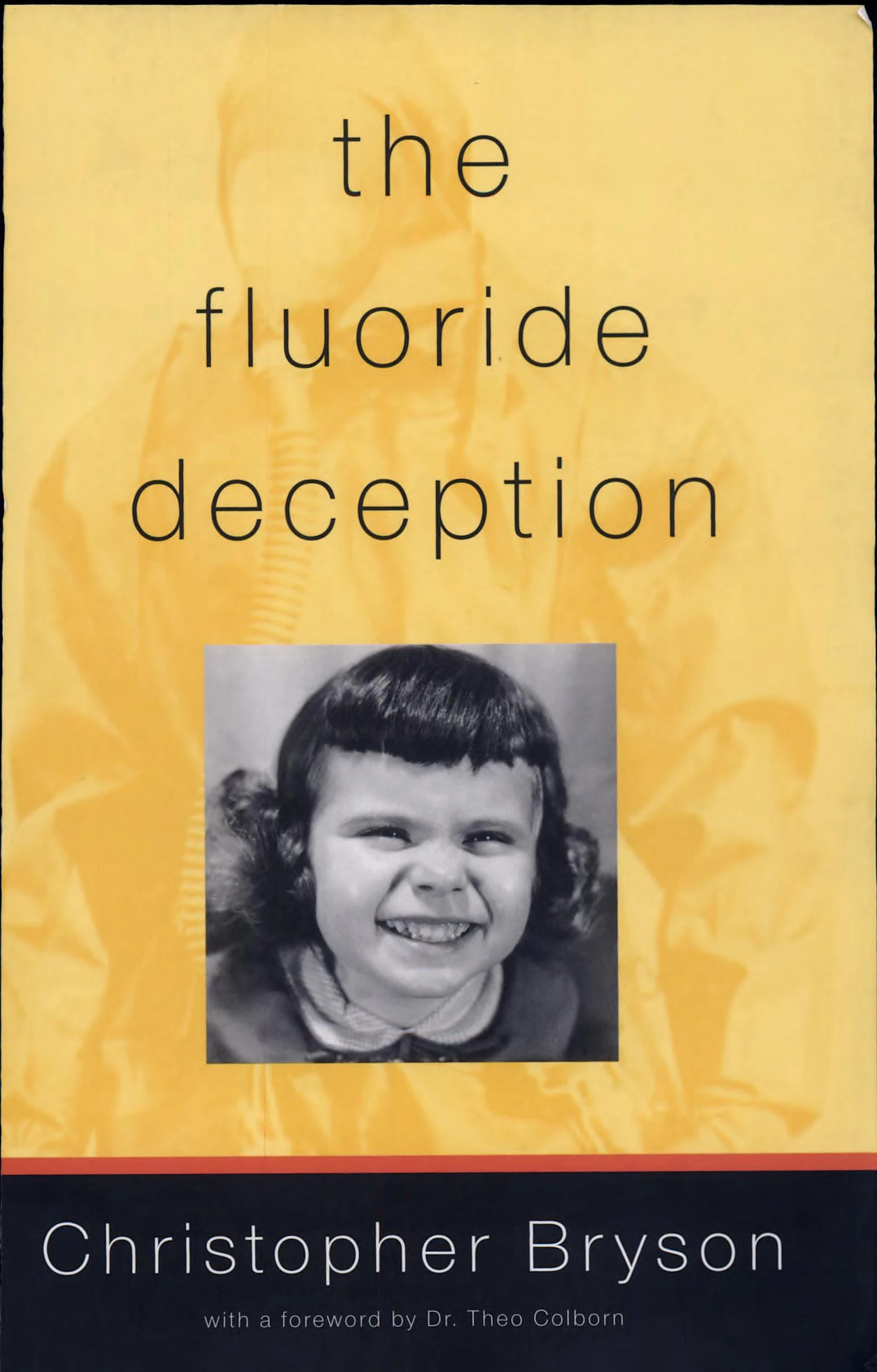
Christopher Bryson’s The Fluoride Deception (Seven Stories Press, 2004; paperback 2006) is essential reading for anyone who wants to understand how a workplace poison and Cold War pollutant became a fixture in American drinking water. Bryson, an award-winning investigative journalist, does not offer speculation. He builds a documented case from Manhattan Project and Atomic Energy Commission archives, scientist interviews, and hundreds of pages of source notes. The Preventive Dental Health Association recommends this book without reservation: it tells the story public-health authorities long refused to tell.
Bryson shows that fluoridation was never a clean public-health discovery that simply “trickled down” into municipal pipes. It grew out of industrial and military necessity. Fluoride compounds were central to uranium enrichment and aluminum production. Pollution lawsuits and worker injury claims threatened major corporations and the wartime nuclear program. Rather than confront the toxicity of fluoride head-on, powerful interests worked to reshape its public image. Bryson traces how officials connected to the Manhattan Project and the National Institute of Dental Research helped rebrand fluoride as a dental benefit—while evidence of harm was minimized, delayed, or buried.
The book’s chapters walk readers through that machinery of deception. “General Groves’s Problem” and “How the Manhattan Project Sold Us Fluoride” place the Newburgh fluoridation experiment and related wartime research in their true context: managing legal and political risk around a dangerous industrial chemical. “Robert Kehoe and the Kettering Laboratory” and “Fluorine Lawyers and Government Dentists” document how a secretive corporate legal network—the Fluorine Lawyers Committee, including giants such as Alcoa, U.S. Steel, Kaiser, and Reynolds—commissioned research useful to defendants facing fluoride-injury claims. That research, directed by Robert Kehoe (better known for defending leaded gasoline), did not see the light of day in the way the public deserved. Bryson recovered what others left buried.
He also returns to Donora, Pennsylvania, and the 1948 air-pollution disaster, where fluoride’s role was contested and downplayed even as families suffered. Across these episodes, a single pattern emerges: conflict of interest at the highest levels, suppression of inconvenient science, and the manufacture of consent for a mass-medication program that never obtained genuine informed consent from the public. Workers paid first; communities paid next. Children continue to pay in exposure they cannot opt out of when fluoride is forced into the water supply.
For PDHA, Bryson’s thesis is not ancient history—it is the foundation of today’s fluoridation debate. The same industrial logic that protected polluters still underwrites the claim that swallowing fluoride is “safe and effective” for everyone, regardless of dose, age, kidney function, or total exposure from toothpaste, processed foods, and other sources. The Fluoride Deception names the interests that engineered that claim and recovers the science they hoped would stay forgotten. Readers who care about preventive dental health, children’s neurological development, and the integrity of public science will find in Bryson both a warning and a call to action: stop medicating entire populations through the tap, restore transparency, and put prevention back where it belongs—on informed choice, nutrition, and hygiene, not on an industrial pollutant in drinking water.
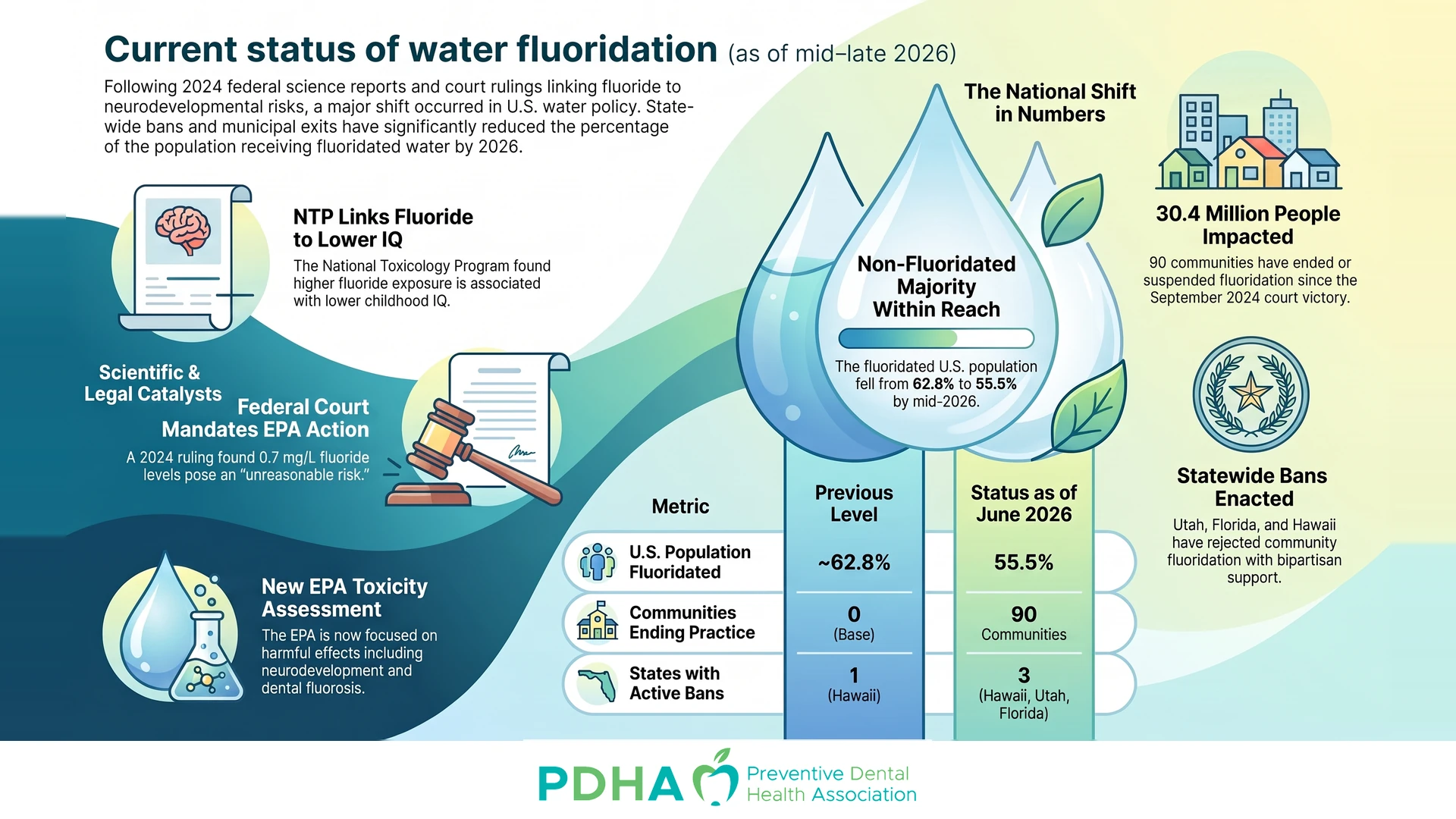
Current status of water fluoridation (as of mid–late 2026)
The scientific and political ground under water fluoridation has shifted dramatically since Bryson’s book appeared—and in the direction his investigation pointed.
Federal science and court findings. In August 2024, the U.S. National Toxicology Program (NTP) concluded with moderate confidence that higher fluoride exposure is associated with lower IQ in children. In September 2024, the U.S. District Court for the Northern District of California found that fluoridation of drinking water at 0.7 mg/L—the level long promoted as “optimal” in the United States—poses an unreasonable risk of reduced IQ in children, and ordered the EPA to address that risk under the Toxic Substances Control Act. That ruling, together with the NTP review, catalyzed an unprecedented wave of local and state action. The EPA has since accelerated work on a Fluoride Human Health Toxicity Assessment focused on harmful effects, including neurodevelopment and dental fluorosis.
States and communities ending fluoridation. According to the Fluoride Action Network (FAN), as of its June 7, 2026 update, 90 communities serving roughly 30.4 million people have ended, suspended, or prevented water fluoridation since the September 2024 federal court victory. Utah (law effective May 7, 2025) and Florida (effective July 1, 2025) enacted statewide bans with bipartisan support, joining Hawaii in rejecting community water fluoridation outside military bases. FAN reports that the share of the U.S. population receiving fluoridated water fell from about 62.8% to 55.5%, bringing a non-fluoridated majority within reach for the first time in decades. Additional bills to ban fluoridation or reverse mandates have been introduced across numerous states heading into and through 2026 legislative sessions.
Independent dental-toxicology stance. The International Academy of Oral Medicine and Toxicology (IAOMT) has long concluded that fluoride added to public water supplies delivers no discernible health benefit from ingestion and is associated with a higher incidence of adverse effects. IAOMT’s position papers urge reducing and eliminating avoidable fluoride exposures—including artificial water fluoridation—as a matter of public and oral-systemic health, citing risks to bone, the central nervous system, endocrine function, and susceptible populations, and stressing the absence of informed consent in mass water medication.
Taken together, NTP findings, the 2024 unreasonable-risk determination, statewide bans, dozens of municipal exits, and IAOMT’s toxicology-based opposition confirm what Bryson documented years earlier: the case for forcing fluoride into drinking water was built on compromised science and institutional conflict of interest—and the public is finally withdrawing consent.
Sources for this status section
- FAN — Communities that have ended fluoridation since the federal court victory (updated June 7, 2026)
- FAN — Two states ban fluoridation (Dec. 31, 2025)
- FAN — Tens of millions protected (Dec. 22, 2025)
- NTP — Fluoride exposure: neurodevelopment and cognition
- EPA — Next step in fluoride health review
- IAOMT — Position on fluoridation
- IAOMT — Water fluoridation risks
- IAOMT — Position paper against fluoride use
Watch / Listen: The Fluoride Deception audiobook
Listen free: Full audiobook playlist (introduction and front matter, Chapters 1–17, and Epilogue).
Open the playlist on YouTube · Start with the first chapter
About the Preventive Dental Health Association
The PDHA is a non-profit organization dedicated to advancing biocompatible, science-based preventive oral health strategies that support systemic health and longevity. Additional information is available at thepdha.org.